In a typical STM experiment, a sharp metal tip is brought very close to the surface of a sample. A voltage is applied between the tip and the sample, and a current flows between them. This current is very sensitive to the distance between the tip and the sample, so by scanning the tip across the surface, a three-dimensional image of the surface can be created.
STM has been used to study the growth of a variety of covalent polymers, including polyethylene, polypropylene, and polystyrene. These polymers are all formed by the polymerization of monomers, which are small molecules that contain a double bond. When these monomers are heated or exposed to a catalyst, they react with each other to form a chain of atoms.
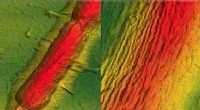
The STM images of these polymers show that the chains grow in a very regular way. The monomers add to the chain one at a time, and the chains grow in a straight line. This is because the covalent bonds between the atoms are very strong, and they prevent the chains from branching or folding.
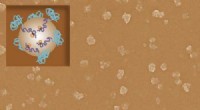
STM has also been used to study the defects in covalent polymers. These defects can be caused by a variety of factors, such as impurities in the starting materials, or by the reaction conditions. The STM images of these defects can help scientists to understand how they form, and how they affect the properties of the polymers.
In summary, STM is a powerful tool for studying the formation and growth of covalent polymers. It allows scientists to visualize the polymers at the atomic level, and to understand how they are formed and how they are affected by defects.