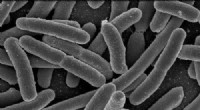
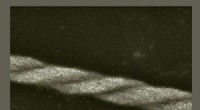
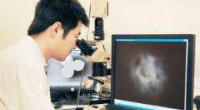
Biofilms are communities of microorganisms that adhere to surfaces and are enclosed in a protective matrix of self-produced extracellular substances. They represent a significant challenge in space environments due to their ability to deteriorate spacecraft components, compromise critical systems, and pose health risks to astronauts. The formation and persistence of biofilms in space are further aggravated by factors like microgravity, increased radiation levels, and the presence of unique microorganisms.
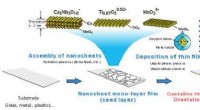
The surface treatment tested on the ISS involves a thin, non-toxic layer of polydopamine that modifies the surface properties of materials, making them less conducive to biofilm formation. The ISS experiments simulated the conditions found inside a spacecraft, exposing the treated and untreated surfaces to a variety of microorganisms known to be present in the spacecraft environment, including bacteria such as Staphylococcus aureus and Pseudomonas aeruginosa, and fungi like Aspergillus niger.
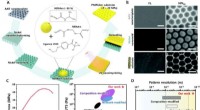
The results, published in the journal npj Biofilms and Microbiomes, revealed a significant reduction in biofilm formation on the surfaces treated with the polydopamine coating. The treated surfaces exhibited up to a 98% reduction in biofilm growth compared to untreated controls. This demonstrates the potential of the surface treatment to mitigate the risks posed by biofilms in space, ensuring a safer and more sanitary environment for astronauts.
The study represents an important step forward in developing effective strategies for biofilm prevention in space. As future space missions become increasingly ambitious and involve longer durations in space, the prevention and control of biofilms will play a critical role in protecting the health and safety of astronauts, as well as ensuring the reliability of spacecraft systems. The ability to mitigate biofilm formation using surface treatments holds great promise for future space exploration missions.
Dr. Michael Roberts, a researcher involved in the study, highlighted the implications of the findings: "This research provides essential information for designing materials that are resistant to biofilm formation, enhancing the sustainability and cost-effectiveness of long-duration space missions." The successful testing of the surface treatment on the ISS paves the way for further research and development of novel biofilm prevention technologies for space applications.