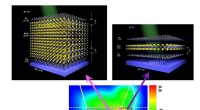
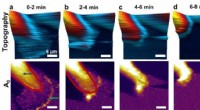
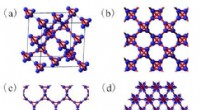
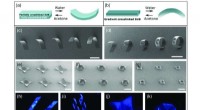
The researchers started with a suspension of micron-sized particles in a liquid. They then introduced the suspension into a microfluidic device, which consisted of a series of channels and chambers. The channels were designed to create a gradient of capillary forces, which caused the particles to self-assemble into 3D structures.
The researchers were able to control the size, shape, and porosity of the 3D structures by varying the flow rate of the suspension and the geometry of the microfluidic device. They also showed that the structures were stable and could be easily removed from the device.
The researchers believe that their method could be used to create a wide variety of functional materials. For example, they could create porous scaffolds for tissue engineering by using particles made of biocompatible materials. They could also create sensors and actuators by using particles that are responsive to specific stimuli.
The research was published in the journal Nature Materials.