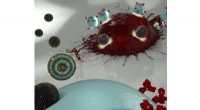
Biofilms are complex communities of microorganisms that live in close association with each other and with a surface. They are found in a wide variety of environments, including the human body, the environment, and industrial settings. Biofilms can cause a variety of problems, including infections, corrosion, and fouling.
The formation of biofilms is a complex process that is not fully understood. However, recent research using CMOS technology has provided new insights into this process.
CMOS Technology
CMOS (complementary metal-oxide-semiconductor) technology is a type of semiconductor technology that is used to fabricate integrated circuits (ICs). CMOS ICs are made by layering different materials on a silicon substrate. The layers of materials include metal, oxide, and semiconductor materials.
CMOS technology has several advantages over other types of semiconductor technology. These advantages include low power consumption, high speed, and small size. CMOS ICs are also very reliable.
Biofilm Formation
Biofilm formation begins with the attachment of microorganisms to a surface. This attachment can occur through a variety of mechanisms, including electrostatic forces, hydrophobic interactions, and specific binding interactions.
Once microorganisms have attached to a surface, they begin to produce extracellular polymeric substances (EPS). EPS is a complex mixture of polysaccharides, proteins, and lipids. EPS helps to form a protective matrix around the microorganisms, which helps to protect them from environmental stresses.
The EPS matrix also provides a scaffold for the growth of new microorganisms. As new microorganisms attach to the EPS matrix, the biofilm grows and matures.
CMOS Technology and Biofilm Formation
CMOS technology has been used to study biofilm formation in a variety of ways. One way that CMOS technology has been used is to create surface microarrays. Surface microarrays are small chips that are coated with a variety of different materials. These materials can be used to attract different types of microorganisms.
By studying the growth of biofilms on surface microarrays, researchers have been able to learn more about the factors that influence biofilm formation. For example, researchers have found that the type of surface material, the presence of nutrients, and the flow of water can all affect biofilm formation.
Conclusion
CMOS technology has provided new insights into the process of biofilm formation. This research has helped to improve our understanding of how biofilms form and grow. This knowledge could lead to the development of new strategies to prevent and control biofilms.