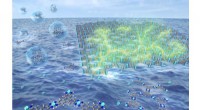
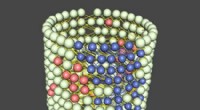
One fundamental mechanism behind the formation of carbon nanostructures is the self-assembly of carbon atoms or molecules. This process is driven by various forces such as van der Waals interactions, hydrogen bonding, or covalent bonding. Under specific conditions, carbon atoms or molecules arrange themselves into ordered and well-defined structures, giving rise to carbon nanotubes, graphene, or fullerenes.
Chemical vapor deposition (CVD) is a commonly used technique for synthesizing carbon nanostructures. In CVD, a carbon-containing gas, such as methane or acetylene, is introduced into a heated chamber containing a substrate. The gas decomposes on the surface of the substrate, releasing carbon atoms that subsequently diffuse and rearrange to form nanostructures. The growth process can be controlled by carefully adjusting the temperature, pressure, and gas composition.
Another important mechanism involved in the formation of carbon nanostructures is the bottom-up approach. This method involves the stepwise assembly of individual molecules or building blocks into larger and more complex structures. For instance, carbon nanotubes can be synthesized by starting with small organic molecules and then gradually adding more carbon atoms through chemical reactions.
Additionally, researchers have explored template-directed synthesis as a means of controlling the formation of carbon nanostructures. Templates such as porous membranes or pre-patterned surfaces can guide the self-assembly process and direct the growth of specific nanostructures.
Understanding the formation mechanisms of carbon nanostructures is crucial for achieving precise control over their size, shape, and properties. This knowledge enables the rational design and synthesis of tailored carbon nanomaterials for diverse applications, including electronics, energy storage, catalysis, and composites.
As the field of nanotechnology continues to advance, further breakthroughs in understanding and manipulating the formation of carbon nanostructures can be expected, opening up new avenues for innovation and technological advancements.