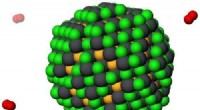
Now, researchers at MIT and the University of California, Berkeley have developed a new way to make perovskite nanocrystals that are much more durable. The key to their approach is to coat the nanocrystals with a thin layer of plastic hair and silica. This protective coating prevents the nanocrystals from coming into contact with the elements that can damage them.
The researchers tested the durability of their new perovskite nanocrystals by exposing them to a variety of harsh conditions, including moisture, heat, and light. They found that the nanocrystals were able to withstand these conditions without any significant degradation in their performance.
This is a significant breakthrough, as it opens up the possibility of using perovskite nanocrystals in a wider range of applications. Their durability makes them ideal for use in outdoor applications, such as solar cells and light-emitting diodes (LEDs).
The researchers say that their new perovskite nanocrystals could also be used in biomedical applications, such as imaging and drug delivery.
The study is published in the journal Nature Materials.
The research was led by MIT professor of materials science and engineering Moungi Bawendi and UC Berkeley professor of chemistry Peidong Yang. Other researchers involved in the study include MIT postdocs Hyunjung Shin, Jun Yin, and Hao-Chun Wu, and UC Berkeley graduate student Yuting Chen.
This work was supported by the U.S. Department of Energy, the National Science Foundation, and the Natural Science Foundation of China.