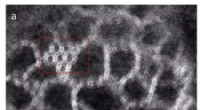
A team of researchers from the University of California, Berkeley, has discovered that nanovoids can improve the performance of materials. Nanovoids are tiny holes that are only a few nanometers in size. They can be created by a variety of methods, such as ion implantation or chemical etching.
The researchers found that nanovoids can improve the strength and toughness of materials. They also found that nanovoids can reduce the amount of energy that is needed to fracture a material. This means that materials with nanovoids can be used to make lighter and more efficient components.
The researchers say that their findings could have a significant impact on the development of new materials for a wide range of applications, such as aerospace, automotive, and medical devices.
How Nanovoids Improve Material Performance
Nanovoids improve material performance by a number of mechanisms.
* Strengthening: Nanovoids can strengthen materials by providing a barrier to the movement of dislocations. Dislocations are defects in the crystal structure of a material that can cause it to fracture. Nanovoids can act as obstacles to dislocations, preventing them from moving and causing the material to break.
* Toughening: Nanovoids can also toughen materials by absorbing energy during fracture. When a material with nanovoids is fractured, the nanovoids can absorb energy by expanding and contracting. This absorption of energy helps to slow down the fracture process and make the material more resistant to fracture.
* Reducing energy consumption: Nanovoids can also reduce the amount of energy that is needed to fracture a material. This is because the nanovoids provide a path for cracks to propagate, which reduces the amount of energy that is needed to break the material.
Applications of Nanovoids
The researchers say that their findings could have a significant impact on the development of new materials for a wide range of applications, such as:
* Aerospace: Nanovoids could be used to make lighter and stronger aircraft components, which would reduce fuel consumption and emissions.
* Automotive: Nanovoids could be used to make lighter and more efficient car parts, which would improve fuel economy and performance.
* Medical devices: Nanovoids could be used to make stronger and more durable medical devices, which would improve patient outcomes.
The researchers are currently working to develop new methods for creating nanovoids in materials. They believe that their research could lead to the development of new materials with improved performance for a wide range of applications.