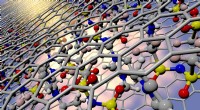
A team of researchers from the University of Science and Technology of China (USTC) has developed a novel type of single-atom nanozyme that shows promise for use in hypoxia-tolerant singlet oxygen-batteries. The nanozyme, which is composed of a single iron atom anchored on a carbon nitride nanosheet, exhibits excellent activity for the generation of singlet oxygen, even under hypoxic conditions. This makes it a promising candidate for use in oxygen-limited environments, such as tumors or deep tissues.
Singlet oxygen is a highly reactive form of oxygen that can be used to kill cancer cells and bacteria. However, the generation of singlet oxygen is typically limited by the availability of oxygen. In hypoxic environments, the concentration of oxygen is low, which makes it difficult to generate singlet oxygen. This is a major limitation for the use of singlet oxygen-based therapies in oxygen-limited environments.
The USTC team's nanozyme overcomes this limitation by using a single-atom catalyst. Single-atom catalysts are highly efficient at catalyzing reactions, even at low concentrations of reactants. This makes them ideal for use in hypoxic environments, where the concentration of oxygen is low.
The USTC team's nanozyme was shown to be highly active for the generation of singlet oxygen, even under hypoxic conditions. This makes it a promising candidate for use in oxygen-limited environments, such as tumors or deep tissues.
The development of this novel single-atom nanozyme is a significant step forward in the field of singlet oxygen-based therapies. This nanozyme could potentially be used to treat a variety of diseases, including cancer and bacterial infections.