How do nanowires work?
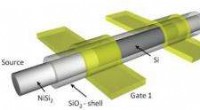
Nanowires work by conducting electricity. When a voltage is applied to a nanowire, electrons flow through the wire from one end to the other. This flow of electrons can be used to power electronic devices, such as transistors and solar cells.
The unique properties of nanowires make them ideal for use in a variety of electronic devices. For example, nanowires can be used to create very small transistors, which can be used to pack more computing power into a smaller space. Nanowires can also be used to create very efficient solar cells, which can convert sunlight into electricity more efficiently than traditional solar cells.
Applications of nanowires
Nanowires are still in the early stages of development, but they have a number of potential applications in a variety of electronic devices. Some of the potential applications of nanowires include:
* Transistors: Nanowires can be used to create very small transistors, which can be used to pack more computing power into a smaller space.
* Solar cells: Nanowires can be used to create very efficient solar cells, which can convert sunlight into electricity more efficiently than traditional solar cells.
* Batteries: Nanowires can be used to create very small batteries, which can be used to power portable devices.
* Displays: Nanowires can be used to create very small displays, which can be used in a variety of electronic devices, such as smartphones and tablets.
Challenges
There are a number of challenges that need to be overcome before nanowires can be used in commercial electronic devices. Some of these challenges include:
* Fabrication: Nanowires are very difficult to fabricate, and the yield rate is often very low.
* Reliability: Nanowires are very fragile and can easily be damaged.
* Cost: Nanowires are still very expensive to produce, which limits their use in commercial devices.
Conclusion
Nanowires are a promising new technology with a number of potential applications in a variety of electronic devices. However, there are a number of challenges that need to be overcome before nanowires can be used in commercial devices.