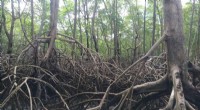
1. Photosynthesis and Carbon Sequestration:
* Plants capture solar energy through photosynthesis: They use sunlight, carbon dioxide, and water to create energy-rich organic compounds (sugars) and release oxygen.
* Carbon storage: This process effectively sequesters carbon from the atmosphere, reducing the greenhouse effect.
* Biomass: The stored carbon forms the basis of plant biomass, which fuels food chains and ecosystems.
2. Respiration and Carbon Release:
* Respiration: Living organisms (plants, animals, microbes) break down organic matter to obtain energy, releasing carbon dioxide back into the atmosphere.
* Decomposition: When organisms die, decomposers (like bacteria and fungi) break down their remains, also releasing carbon.
* Balance: The balance between photosynthesis (carbon uptake) and respiration/decomposition (carbon release) impacts the atmospheric concentration of carbon dioxide.
3. Albedo and Land Cover:
* Albedo: The reflectivity of Earth's surface. Different land covers (forests, grasslands, deserts) have varying albedos.
* Impact: Forests have lower albedo than deserts, absorbing more sunlight and contributing to warmer temperatures.
* Changes: Deforestation and land-use changes alter albedo, impacting regional and global climate.
4. Greenhouse Gas Emissions:
* Methane and Nitrous Oxide: Biosphere processes release methane and nitrous oxide, both powerful greenhouse gases.
* Sources: Methane is released from wetlands, livestock, and thawing permafrost. Nitrous oxide is produced by agricultural practices and microbial processes.
* Impact: These gases contribute to warming the planet.
5. Water Cycle and Climate Feedbacks:
* Evapotranspiration: Plants release water vapor into the atmosphere through transpiration, influencing local humidity and cloud formation.
* Feedbacks: Changes in vegetation cover impact the water cycle, affecting rainfall patterns, regional climate, and even global atmospheric circulation.
Overall Impact:
The biosphere's role in trapping solar energy and cycling carbon significantly influences the Earth's climate system. Changes in land cover, vegetation density, and ecosystem functioning can have profound effects on global temperatures, precipitation patterns, and other climate variables.
Key Points to Remember:
* The biosphere is a complex system with multiple interconnected processes influencing climate.
* Photosynthesis and carbon sequestration play a crucial role in mitigating climate change.
* Changes in land use and vegetation cover have significant impacts on albedo, greenhouse gas emissions, and water cycles.
* Understanding the biosphere's role in climate regulation is essential for developing effective strategies to address climate change.