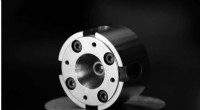
When people first start measuring pipes, they may be confused. After all, pipe sizes range from 1/16 up to 4, but these sizes don't seem to match with the actual dimensions of the pipe itself. In addition, male pipe pipes and female pipes are sized slightly differently. In order to measure either type of pipe accurately, you need to measure its OD (outside diameter) and compare it to a chart of pipe sizes.
Place the calipers of the micrometer around the part of the pipe that screws into the adjacent pipe.
Turn the micrometer screw until the calipers gently grip the pipe.
Look at the sleeve of the micrometer and take note of the measurement displayed.
Open the Plumbing Supply website. Look in the chart to find the measurement in column 2. Locate the thread (or pipe) size directly to the right of the cell you just identified.
Place the calipers of the micrometer around the main section of the pipe.
Turn the micrometer screw until the calipers gently grip the pipe.
Look at the sleeve of the micrometer and take note of the measurement displayed.
Follow the steps for determining male pipe size on the Plumbing Supply website to determine the female pipe size.
Male pipes may be labeled "MPT" (Male Pipe Thread), whereas female pipes may be labeled "FPT" (Female Pipe Thread).
Do not size the pipe based on the number of threads per inch. There can be several different sizes that have the same threads per inch, so this method is inaccurate.