When asked to name the priciest material, most people think of gold, platinum, or oil. Yet the real world’s most expensive substance is antimatter, a form of matter that is so costly to produce it defies conventional budgeting.
Antimatter consists of antiparticles—mirror counterparts to ordinary particles that share the same mass and spin but carry opposite electrical charge and magnetic moment. For every electron there is a positron; for every proton, an antiproton; and for every neutron, an antineutron. When matter and antimatter meet, they annihilate each other, releasing intense gamma‑ray energy.
The universe contains both matter and antimatter, but a small asymmetry left more matter than antimatter after the Big Bang, allowing the cosmos to survive. That asymmetry is one of the biggest unanswered questions in physics.
Producing antimatter in particle accelerators is an extraordinarily energy‑intensive process. A single gram of antiprotons is estimated to cost around $62.5 trillion according to a NASA study, while a CERN physicist has suggested that a 1/100‑nanogram sample could be worth a kilogram of gold—approximately $5.8 quadrillion per gram. These figures far exceed the global GDP, illustrating the staggering scale of the cost.
Two key factors drive the price: the minuscule yield per unit of investment and the difficulty of storing antimatter before it annihilates. Current accelerators can generate only tiny amounts of antimatter, and most of it is lost before it can be collected.
The first successful creation of antiprotons occurred in 1955 at the Bevatron, a then‑state‑of‑the‑art accelerator at Lawrence Berkeley National Laboratory. In 1995, CERN produced the first antihydrogen atom. However, these atoms annihilated within microseconds, preventing long‑term study.
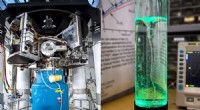
To overcome this, CERN built the Antiproton Decelerator (AD), which slows antiprotons using a powerful electric field. The AD has successfully stored antihydrogen for up to 16 minutes, enabling detailed investigations of its properties and laying groundwork for future, more efficient production methods.
Despite these advances, the energy required to produce and contain antimatter remains a major obstacle. Until a breakthrough in production efficiency occurs, antimatter will remain the universe’s most expensive substance.