Bettmann/Getty Images
Albert Einstein is synonymous with brilliance, yet his legacy is often confined to physics. While he pioneered theories that reshaped our understanding of the universe, he also turned his curiosity toward everyday technology—most notably, the refrigerator.
Early 20th‑century refrigeration was a perilous affair. Conventional units circulated toxic chemicals—ammonia, sulfur dioxide, or methyl chloride—whose accidental leaks could prove fatal. The heart of the problem lay in the compressor: the component that re‑condenses the refrigerant gas into liquid. Einstein’s sharp mind saw that the seals in these compressors were prone to failure under high pressure, causing dangerous leaks.
In 1926, after reading a newspaper account of a Berlin family who died from a refrigerant leak, Einstein reached out to Leo Szilard, a fellow scientist with a knack for practical devices. Together, they set out to eliminate the mechanical compressor entirely and pioneered the absorption refrigerator, a design that would later influence modern, compressor‑free cooling systems.
Photoquest & Bachrach/Getty
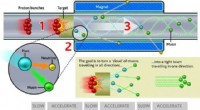
Their solution hinged on two key innovations. First, they employed an evaporator flask filled with liquid butane, which boils at lower pressure, effectively replacing the mechanical compression cycle. Second, they introduced an electromagnetic pump that used a potassium‑sodium alloy to move the liquid metal—creating a piston‑like effect without moving parts. This design eliminated the fragile seals that had plagued traditional compressors, drastically reducing the risk of toxic leaks.
Although the Einstein–Szilard refrigerator was less efficient than its mechanical counterparts and produced audible bubble noise from the liquid‑metal cycle, it represented a bold leap toward safer home appliances.
Fpg/Getty Images
The inventors secured U.S. Patent No. 1,781,541 in 1930, but commercial adoption never materialized. The Great Depression strained capital, while the rise of the Nazi regime forced Einstein and Szilard—both Jewish pacifists—to flee Germany in the early 1930s. Their exile halted further development, and post‑war priorities shifted toward newer refrigerants.
In 1930, American chemist Thomas Midgley introduced chlorofluorocarbons (CFCs), branded as Freon. These non‑toxic gases quickly became industry standard, eclipsing the absorption design. Although later discovered to harm the ozone layer and subsequently banned, the transition to safer refrigerants rendered the Einstein–Szilard concept a historical curiosity.