Solids
* Particle Arrangement: Particles are tightly packed together in a fixed, rigid structure (lattice).
* Movement: Particles vibrate in place but don't move freely. They have very limited translational motion (moving from one place to another).
* Example: Think of the atoms in a crystal of salt.
Liquids
* Particle Arrangement: Particles are closer together than in gases but not as tightly packed as solids. They have some freedom to move around.
* Movement: Particles move more freely than in solids, they can slide past each other, leading to fluidity. They exhibit both translational and vibrational motion.
* Example: Think of the molecules in water.
Gases
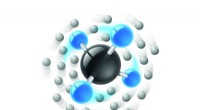
* Particle Arrangement: Particles are far apart and have no fixed arrangement.
* Movement: Particles move rapidly in random directions, colliding with each other and the walls of their container. They have high translational motion.
* Example: Imagine the molecules in the air.
Key Points:
* Temperature and Movement: The higher the temperature, the faster the particles move in all states of matter.
* State Changes: Heating a solid can provide enough energy to break its rigid structure, causing it to melt into a liquid. Further heating can cause the liquid to vaporize into a gas.
* Diffusion: The movement of particles from a high concentration area to a low concentration area is known as diffusion. This process happens most quickly in gases because the particles are more mobile.
Let me know if you'd like more detail on any specific aspect of this!