Fusion is a nuclear reaction where two or more atomic nuclei combine to form one or more different atomic nuclei and subatomic particles (neutrons or protons). This process releases a tremendous amount of energy, much greater than in chemical reactions.
Here's a breakdown of what fusion entails:
The Basics:
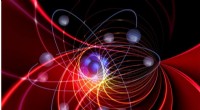
* Nucleus: The dense, positively charged core of an atom, consisting of protons and neutrons.
* Atomic Number: The number of protons in an atom's nucleus, defining the element.
* Fusion: The process where two light nuclei collide and fuse together, forming a heavier nucleus.
The Process:
1. High Temperature and Pressure: Fusion requires extremely high temperatures (millions of degrees Celsius) and pressures to overcome the electrostatic repulsion between positively charged nuclei. This overcomes the Coulomb barrier, allowing the nuclei to get close enough to fuse.
2. Strong Nuclear Force: Once the nuclei are close enough, the strong nuclear force, a powerful attractive force, binds them together, creating a heavier nucleus.
3. Energy Release: The fusion process releases a massive amount of energy, usually in the form of kinetic energy of the newly formed nucleus and other particles. This energy is what makes fusion a potential energy source.
Key Features:
* Energy Release: Fusion releases significantly more energy per unit mass than chemical reactions.
* Light Nuclei: Fusion typically involves lighter nuclei like hydrogen isotopes (deuterium and tritium).
* High Temperatures and Pressures: Fusion requires extremely high temperatures and pressures to overcome the electrostatic repulsion between nuclei.
* Stable Products: The products of fusion reactions are typically stable nuclei, making it a clean and safe energy source.
Examples:
* Deuterium-Tritium (D-T) Fusion: The most well-studied fusion reaction, producing helium and a neutron, releasing a significant amount of energy.
* Proton-Proton Chain: This series of fusion reactions occurring in the Sun, where hydrogen nuclei combine to form helium, releasing energy that powers the Sun.
Potential Applications:
* Energy Production: Fusion has the potential to be a clean, safe, and virtually inexhaustible source of energy for the future.
* Medical Isotopes: Fusion reactions can produce medical isotopes for diagnosis and treatment.
* Astrophysics: Fusion plays a crucial role in the energy production of stars and other celestial objects.
Challenges:
* Sustaining Fusion: Maintaining the high temperatures and pressures required for fusion is a major technological challenge.
* Confinement: Confining the extremely hot plasma required for fusion is another critical hurdle.
Despite the challenges, research in fusion technology is progressing rapidly, and the potential benefits make it a promising area for future energy production and scientific advancement.