Let's break down the fascinating relationship between rockets and momentum:
Rockets:
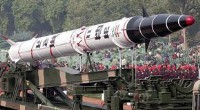
* How They Work: Rockets work on the principle of Newton's Third Law of Motion, which states that for every action, there is an equal and opposite reaction. Rockets expel hot gas (action) from their engines, and this creates an opposite force (reaction) that propels the rocket forward.
* Fuel and Combustion: Rockets typically use a combination of fuel (like liquid hydrogen) and oxidizer (like liquid oxygen) to create a powerful combustion reaction. This reaction generates the hot gas needed for propulsion.
* Types of Rockets: There are various types of rockets, including:
* Solid-Fuel Rockets: Simpler, often used for short-duration burns.
* Liquid-Fuel Rockets: More complex but provide greater thrust and control.
* Hybrid Rockets: Combine aspects of solid and liquid fuels.
Momentum:
* Definition: Momentum is a measure of an object's mass and velocity. It's calculated as momentum = mass x velocity.
* Conservation of Momentum: A fundamental principle in physics, the law of conservation of momentum states that the total momentum of a closed system remains constant. In other words, momentum cannot be created or destroyed, only transferred.
* Rockets and Momentum: Rockets harness the principle of conservation of momentum to achieve thrust. By expelling mass (hot gas) in one direction, the rocket gains an equal and opposite momentum, propelling it forward.
How Rockets Utilize Momentum:
1. Initial Momentum: A rocket at rest has zero momentum.
2. Burning Fuel: When the rocket ignites its engine, it expels hot gas (mass) with a high velocity. This expelled gas has significant momentum in one direction.
3. Conservation in Action: Since momentum is conserved, the rocket gains an equal and opposite momentum, propelling it forward. This is why rockets need to be massive and burn a lot of fuel to generate significant thrust.
Key Points:
* Higher Mass = Higher Momentum: A heavier rocket will have greater momentum for a given velocity.
* Higher Velocity = Higher Momentum: A faster-moving rocket will have greater momentum for a given mass.
* Momentum Transfer: The rocket transfers its momentum to the expelled gas, which is why rockets are able to reach incredibly high speeds.
Understanding momentum is crucial for comprehending how rockets function and how they are able to travel through space.