Key Components:
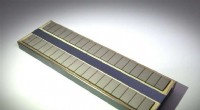
1. Vibrating Reed: The heart of the device is a set of metal reeds, each tuned to resonate at a specific frequency. The reeds are typically mounted on a frame, and each reed has a different natural frequency.
2. Electromagnet: An electromagnet is positioned near the reeds. When an AC signal is applied to the electromagnet, it creates a fluctuating magnetic field.
3. Indicator: A pointer is attached to a common support for the reeds.
Operating Principle:
* Resonance: When the frequency of the AC signal matches the natural frequency of one of the reeds, the reed will resonate, vibrating at a large amplitude.
* Pointer Movement: The vibrating reed will transfer its motion to the common support, causing the pointer to move.
* Frequency Indication: The position of the pointer indicates the frequency of the AC signal. The reed that vibrates most strongly corresponds to the frequency of the signal.
Advantages:
* Simplicity: Relatively simple design and construction.
* Direct Indication: Provides a direct reading of the frequency.
* Reliability: Mechanical resonance is a robust phenomenon, leading to reliable frequency measurement.
Disadvantages:
* Limited Accuracy: The accuracy is limited by the tolerances of the reeds and the mechanical components.
* Narrow Frequency Range: Each reed is tuned to a specific frequency, limiting the frequency range that can be measured with a single instrument.
* Not Suitable for High Frequencies: Not ideal for measuring frequencies above a few hundred Hertz due to the physical limitations of the vibrating reeds.
Applications:
* Power Systems: Historically used in power systems to monitor the frequency of the AC power supply.
* Laboratory Experiments: Used in educational settings to demonstrate the concept of resonance.
* Audio Equipment: Some older audio equipment, like tuners, utilized mechanical resonance for frequency indication.
Modern Alternatives:
Modern frequency meters rely on electronic circuits and digital signal processing, offering higher accuracy, wider frequency ranges, and faster response times compared to mechanical resonance type frequency meters.
In summary:
Mechanical resonance type frequency meters provide a simple and direct method for measuring the frequency of AC signals. While they have limitations in accuracy and frequency range, they are still valuable for educational purposes and some specialized applications.