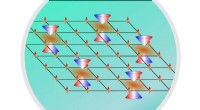
* Particle Arrangement: In solids, particles are tightly packed and arranged in a highly ordered, three-dimensional structure called a lattice. These particles are held together by strong intermolecular forces (like ionic bonds, covalent bonds, or metallic bonds).
* Limited Movement: The strong bonds restrict the particles from moving freely. They can only vibrate slightly around their fixed positions.
* Shape and Volume: This rigidity gives solids their definite shape and volume. They resist any attempt to change their shape or compress their volume.
* Flowing vs. Deformation: While solids can deform under pressure, this deformation is temporary and they will return to their original shape when the pressure is released. This is different from flowing, which is a continuous change in shape under an applied force.
Contrast with Liquids and Gases:
* Liquids: Particles are more loosely packed and can move around each other, allowing for fluidity and taking the shape of their container.
* Gases: Particles are far apart and move randomly with high kinetic energy, making them highly compressible and able to fill any container.
Exceptions:
While most solids are rigid, there are some exceptions:
* Amorphous Solids: Some solids, like glass or rubber, don't have a well-defined crystal structure. They exhibit some degree of fluidity over long periods.
* Viscoelastic Solids: These materials exhibit both solid and liquid characteristics, allowing them to deform under stress and then slowly recover their original shape.
In essence: The rigidity of solids arises from the strong bonds between their particles, which restrict their movement and prevent them from flowing like liquids or gases.