1. Observation and Experimentation:
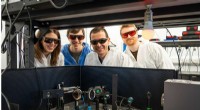
* Physicists conduct experiments to test theories and gather data about the physical world.
* They use sophisticated instruments to make precise measurements and observations.
2. Theoretical Modeling:
* Physicists develop mathematical models and theories to explain observed phenomena and predict new ones.
* They use these models to understand the underlying principles governing the universe.
3. Data Analysis:
* Physicists analyze experimental data to extract meaningful insights and confirm or refute their theoretical models.
* They employ statistical tools and computational methods to draw conclusions.
4. Communication and Collaboration:
* Physicists communicate their findings through publications, presentations, and collaborations with other researchers.
* They share knowledge and ideas to advance scientific understanding.
5. Applications:
* Physicists apply their knowledge to develop new technologies, solve practical problems, and improve our lives.
* Their research contributes to fields like medicine, engineering, and energy.
In essence, a physicist seeks to understand the universe at its most fundamental level, using observation, theory, and experimentation to unlock the secrets of nature.