Here's a breakdown:
* Wave Speed: The speed of a wave is determined by the properties of the medium it travels through. For example, sound travels faster in solids than in liquids, and faster in liquids than in gases.
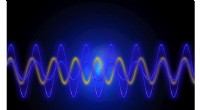
* Wavelength: The distance between two consecutive crests (or troughs) of a wave.
* Frequency: The number of waves that pass a fixed point per second.
The relationship between speed, wavelength, and frequency is:
Speed = Wavelength x Frequency
Example:
* A sound wave with a wavelength of 1 meter and a frequency of 100 Hz would have a speed of 100 meters per second (1 meter x 100 Hz = 100 m/s).
Note:
* The speed of light in a vacuum is a constant value, approximately 299,792,458 meters per second.
* The speed of sound in air at room temperature is approximately 343 meters per second.
So, to answer your question directly, you need to know the type of wave and the medium it's traveling through to calculate the distance traveled each second.