Approaching:
* Higher Frequency: When the source of the waves is moving towards the observer, the waves are compressed, resulting in a higher frequency. This means the sound will sound higher pitched or the light will appear shifted towards the blue end of the spectrum (blueshift).
Moving Away:
* Lower Frequency: When the source of the waves is moving away from the observer, the waves are stretched out, resulting in a lower frequency. This means the sound will sound lower pitched or the light will appear shifted towards the red end of the spectrum (redshift).
Key Points:
* Relative Motion: The Doppler effect depends on the relative motion between the source and the observer. It doesn't matter which one is moving; it's the motion *relative* to each other that counts.
* All Waves: The Doppler effect applies to all types of waves, including sound, light, and water waves.
* Applications: The Doppler effect has many practical applications, including:
* Radar: Used to detect moving objects, like cars or airplanes.
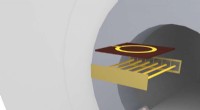
* Medical Imaging: Used in ultrasound and Doppler imaging to assess blood flow.
* Astronomy: Used to study the motion of stars and galaxies.
Let me know if you'd like a more detailed explanation of any specific aspect of the Doppler effect!