By Nature:
* Fundamental Forces: These are the most basic forces in nature, and they cannot be explained in terms of other forces. There are four known fundamental forces:
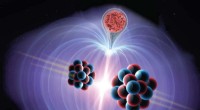
* Strong Nuclear Force: The strongest force, responsible for holding the nucleus of an atom together.
* Weak Nuclear Force: Responsible for radioactive decay and some other nuclear processes.
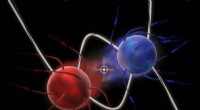
* Electromagnetic Force: Governs the interaction between charged particles, including electricity and magnetism.
* Gravitational Force: The weakest force, but it acts over long distances and is responsible for the attraction between any two objects with mass.
* Non-Fundamental Forces: These are forces that can be explained in terms of the fundamental forces. Examples include:
* Friction: A force that opposes motion between two surfaces in contact.
* Tension: A force that is transmitted through a rope, string, or similar object when it is pulled tight.
* Normal Force: A force that acts perpendicular to a surface and prevents an object from passing through it.
* Air Resistance: A force that opposes the motion of an object through air.
* Buoyancy: An upward force exerted by a fluid on an object submerged in it.
By Direction:
* Contact Forces: These are forces that require physical contact between the objects involved. Examples include friction, tension, and normal force.
* Non-Contact Forces: These are forces that can act on objects even when they are not in direct contact. Examples include gravitational force and electromagnetic force.
By Action:
* Conservative Forces: These are forces that do not depend on the path taken by an object, only on the initial and final positions. Examples include gravitational force and the force due to an ideal spring.
* Non-Conservative Forces: These are forces that do depend on the path taken by an object. Examples include friction and air resistance.
Other Classifications:
* Internal Forces: These are forces that act between objects within a system.
* External Forces: These are forces that act on objects from outside the system.
It is important to note that these classifications are not mutually exclusive. For example, friction can be considered a contact force, a non-conservative force, and an internal force depending on the context.
Ultimately, the best way to classify forces depends on the specific problem you are trying to solve.