1. Require a Medium: Mechanical waves *need* a medium (like air, water, or a solid) to travel through. They cannot propagate in a vacuum like light waves.
2. Transfer Energy, Not Matter: Mechanical waves transfer energy from one point to another, but they don't actually move matter over large distances. Imagine a rope: the wave travels along the rope, but the individual rope segments only move up and down a small amount.
3. Types of Motion:
* Transverse Waves: The particles in the medium move perpendicular to the direction the wave is traveling (like a wave on a string).
* Longitudinal Waves: The particles in the medium move parallel to the direction the wave is traveling (like sound waves).
4. Wave Properties:
* Amplitude: The maximum displacement of a particle from its rest position.
* Wavelength: The distance between two consecutive crests or troughs of a wave.
* Frequency: The number of complete waves passing a point per unit time.
* Speed: How fast the wave travels through the medium. The speed is related to the frequency and wavelength by the equation: Speed = Frequency x Wavelength.
5. Interference: Waves can interact with each other, resulting in:
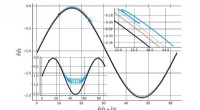
* Constructive interference: When waves meet and their crests align, they reinforce each other, creating a larger amplitude.
* Destructive interference: When waves meet and their crests and troughs align, they cancel each other out, reducing the amplitude.
6. Diffraction: Waves can bend around obstacles or spread out through openings. This is more pronounced when the wavelength is comparable to the size of the obstacle or opening.
Examples of Mechanical Waves:
* Sound waves
* Water waves
* Seismic waves
* Waves on a string