The Theory of Relativity
The theory of relativity is actually two theories:
* Special Relativity (1905): Deals with the relationship between space and time, and how they are affected by motion. It's based on two postulates:
* The laws of physics are the same for all observers in uniform motion.
* The speed of light in a vacuum is the same for all observers, regardless of the motion of the light source.
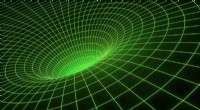
* General Relativity (1915): Expands on special relativity to include gravity. It describes gravity not as a force, but as a curvature of spacetime caused by mass and energy.
How Relativity Differs from Other Theories
Here are some key differences between the theory of relativity and other scientific theories:
* Scope: Relativity deals with fundamental concepts of space, time, gravity, and the universe at large. Other theories often focus on more specific phenomena within these frameworks.
* Revolution: Relativity fundamentally changed our understanding of the universe, challenging classical Newtonian physics. It's a paradigm shift that influenced many other branches of science.
* Mathematical Complexity: Relativity relies on advanced mathematics, particularly differential geometry, which makes it more complex than many other theories.
* Experimental Verification: While many other theories have been well-tested, relativity has faced numerous experimental challenges and has been consistently validated, making it one of the most robust theories in physics.
Relativity's Place in Science
The theory of relativity is a cornerstone of modern physics. It provides the foundation for our understanding of:
* Cosmology: The origin and evolution of the universe.
* Astrophysics: The behavior of stars, black holes, and galaxies.
* Navigation: GPS systems rely on relativistic corrections.
* Particle Physics: Understanding the fundamental building blocks of matter.
In Conclusion
The theory of relativity is a powerful and complex framework that has revolutionized our understanding of the universe. It stands out for its broad scope, its revolutionary nature, and its extensive experimental verification. It continues to be a vital foundation for ongoing research in physics and related fields.