1. Reflection:
* What happens: Light bounces off the surface of the material.
* Examples: Mirrors, shiny surfaces, water.
* Types:
* Specular reflection: Light rays reflect in a single direction, creating a clear image (like a mirror).
* Diffuse reflection: Light rays scatter in multiple directions, making the surface appear dull (like a piece of paper).
2. Absorption:
* What happens: Light energy is absorbed by the material, converting it into heat.
* Examples: Black objects absorb most wavelengths of light, appearing dark.
* Factors: The color of the material determines which wavelengths are absorbed.
3. Transmission:
* What happens: Light passes through the material.
* Examples: Glass, water, air.
* Types:
* Transparent: Light passes through with minimal scattering (like glass).
* Translucent: Light passes through, but is scattered, making objects appear blurry (like frosted glass).
* Opaque: Light cannot pass through (like a wall).
4. Refraction:
* What happens: Light bends as it passes from one medium to another (e.g., from air to water).
* Examples: A straw appearing bent in a glass of water, rainbows.
* Factors: The angle of incidence and the refractive indices of the two materials determine the degree of bending.
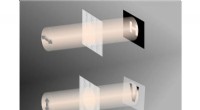
5. Diffraction:
* What happens: Light waves spread out as they pass through narrow openings or around obstacles.
* Examples: Light passing through a pinhole, the colored bands seen when light passes through a narrow slit.
6. Scattering:
* What happens: Light is deflected in random directions due to interactions with particles in the material.
* Examples: The blue color of the sky, the white light from a cloud.
Summary:
* Reflection: Light bounces off
* Absorption: Light is absorbed
* Transmission: Light passes through
* Refraction: Light bends
* Diffraction: Light spreads out
* Scattering: Light is deflected randomly
The specific interactions of light waves with different materials determine how we see the world around us. These interactions are crucial in various technologies like photography, optical fibers, and lasers.