* Gravity's Constant Acceleration: Gravity exerts the same force on all objects, causing them to accelerate downwards at a constant rate of approximately 9.8 m/s². This means every second, an object's speed increases by 9.8 meters per second.
Why do we see different falling speeds in real life?
The reason we perceive different falling speeds is due to air resistance, a force that opposes motion through the air.
* Shape and Surface Area: Objects with larger surface areas, like a parachute, experience more air resistance, slowing their descent.
* Weight and Air Resistance: While gravity acts equally on all objects, heavier objects have a greater gravitational force pulling them down. This can sometimes counteract the effect of air resistance, leading to a faster perceived descent.
Example:
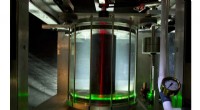
* A feather and a bowling ball dropped in a vacuum chamber will fall at the same rate.
* In the open air, the feather will fall much slower due to the air resistance acting on its large surface area. The bowling ball, with its smaller surface area, will fall much faster.
In conclusion:
While it seems counterintuitive, all objects fall at the same rate in a vacuum. Air resistance is the primary factor that creates the illusion of different falling speeds in our everyday experiences.