1. The Law of Inertia (Newton's First Law):
* An object at rest stays at rest, and an object in motion stays in motion at a constant speed and direction unless acted upon by an unbalanced force.
2. What does it mean?
* Inertia is about resisting changes in motion: Think of an object sitting on a table. It won't suddenly start moving unless you push it (apply a force). Similarly, a moving object won't suddenly stop unless something slows it down (friction, another object, etc.).
* Mass is a measure of inertia: The more massive an object is, the harder it is to change its motion. It takes more force to start a heavy object moving or to stop it.
3. How does inertia work at the atomic level?
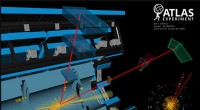
* We don't have a complete picture, but the standard model of particle physics suggests that inertia arises from the interactions between particles and the Higgs field. This field gives particles mass, which, in turn, is related to their inertia.
4. Examples of inertia in action:
* A car suddenly stopping: Your body continues to move forward because of inertia.
* A ball rolling across a table: It keeps rolling until friction slows it down.
* Shaking a tablecloth and leaving dishes on the table: The dishes stay put due to inertia.
Key points:
* Inertia is not a force itself; it's the resistance to changes in motion.
* Forces are required to overcome inertia.
* Inertia is an essential concept in understanding motion and forces.
Let me know if you have more questions about inertia!