1. Transverse Waves:
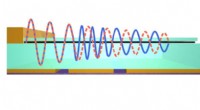
* Particle motion is perpendicular to wave direction: Think of a wave on a string. The string moves up and down (perpendicular to the wave's direction of travel), while the wave itself moves horizontally.
* Examples: Light waves, electromagnetic waves, waves on a string.
2. Longitudinal Waves:
* Particle motion is parallel to wave direction: Imagine a spring. When you push one end, the coils compress and expand in the same direction as the wave travels.
* Examples: Sound waves, seismic P-waves.
Key Points:
* Energy transfer: Both transverse and longitudinal waves transfer energy through the medium without transferring matter.
* Medium: Waves need a medium to travel (except electromagnetic waves). The particles in the medium oscillate around their equilibrium position, transferring energy.
* Wave speed: The speed of a wave is determined by the properties of the medium it travels through.
In summary:
The direction a wave travels and the motion of the particles within it are directly related. Whether the particles move perpendicularly or parallel to the wave direction depends on the wave type. Understanding this relationship helps us understand how waves transport energy and interact with matter.