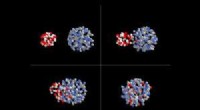
Cold Fluid
* Slow Motion: Particles in a cold fluid move slowly. They have less kinetic energy (energy of motion) and vibrate less vigorously.
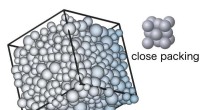
* Close Together: Due to lower energy, the particles are closer together, resulting in a denser fluid.
* Less Frequent Collisions: Particles collide less frequently because they're moving slower.
Hot Fluid
* Fast Motion: Particles in a hot fluid move quickly. They have more kinetic energy and vibrate more vigorously.
* Farther Apart: The increased energy causes particles to spread out, leading to a less dense fluid.
* More Frequent Collisions: Particles collide more often due to their faster speeds.
Analogy:
Imagine a crowded room with people standing close together (cold fluid). Everyone is moving slowly, and they occasionally bump into each other. Now imagine the same room, but the people are excited and moving quickly (hot fluid). They're spread out more, and they bump into each other more frequently.
Key Points:
* Temperature is a measure of the average kinetic energy of the particles. Higher temperature means higher kinetic energy and faster particle motion.
* The state of matter (solid, liquid, gas) also influences particle movement. In solids, particles vibrate in fixed positions. In liquids, particles can move past each other. In gases, particles move freely and collide frequently.
Let me know if you have any other questions!