1. Reflection:
* This is the most common outcome. The light bounces off the surface, changing direction.
* Specular reflection: This is a smooth, mirror-like reflection where all the light rays reflect at the same angle. This happens on polished metal surfaces.
* Diffuse reflection: This happens on rough surfaces, where the light rays scatter in many different directions.
2. Absorption:
* Some of the light's energy is absorbed by the metal, causing the metal to heat up.
* The amount of absorption depends on the metal's properties, such as its color and composition.
* This is why dark-colored metals absorb more heat than shiny metals.
3. Transmission:
* In some cases, light can pass through thin layers of metal, especially if the metal is very thin or has a specific composition.
* This is why some metals are used in windows or other transparent applications.
4. Scattering:
* Some light can be scattered by the metal's surface, changing direction and losing some energy.
* This is especially noticeable in metals with rough surfaces.
5. Emission:
* When the metal absorbs light, it can also emit light of different wavelengths.
* This is the principle behind photoluminescence and some other optical phenomena.
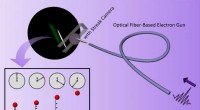
6. Photoelectric Effect:
* When light with high enough energy hits a metal, it can eject electrons from the metal's surface.
* This is the principle behind photomultipliers and other light-sensitive devices.
In summary:
When light hits a metal surface, it can be reflected, absorbed, transmitted, scattered, emit light, or cause photoelectric effects. The specific outcome depends on the properties of the light and the metal.