Waves:
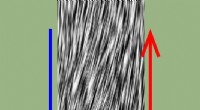
* Definition: A disturbance that travels through a medium or space, transferring energy but not matter.
* Characteristics:
* Oscillation: Waves exhibit periodic motion, like a vibrating string or the rise and fall of water.
* Propagation: They travel through a medium or space, spreading out from a source.
* Superposition: Waves can interfere with each other, adding or canceling out.
* Diffraction: Waves can bend around obstacles.
* Examples: Sound waves, light waves, water waves, electromagnetic waves.
Particles:
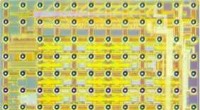
* Definition: A small, localized object that possesses mass and occupies space.
* Characteristics:
* Discrete: Particles are individual units, not continuous like waves.
* Localized: They exist at a specific point in space.
* Momentum: They have mass and velocity, therefore momentum.
* Collisions: Particles interact with each other through collisions.
* Examples: Electrons, protons, neutrons, atoms, molecules.
The Complication: Wave-Particle Duality
The problem is that things at the quantum level (like photons and electrons) exhibit properties of *both* waves and particles. This is known as wave-particle duality.
* Wave-like behavior: Electrons can diffract and interfere like waves. Light can exhibit interference patterns.
* Particle-like behavior: Photons can knock electrons out of atoms, behaving like particles. Electrons have a defined location and momentum.
So, how do we reconcile this?
* It's not about choosing one or the other: It's about understanding that both descriptions are necessary to fully understand the nature of light, matter, and other quantum phenomena.
* The nature of reality is probabilistic: Quantum mechanics describes the behavior of these entities in terms of probabilities, not definite paths or positions.
In Summary:
* Waves and particles are distinct concepts with different characteristics.
* At the quantum level, things are not strictly one or the other, but exhibit both wave-like and particle-like properties.
* This duality is a fundamental principle of quantum mechanics and reflects the probabilistic nature of the universe at its smallest scales.