Here's why it happens:
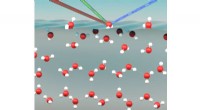
* Wave speed changes: When a wave (like light or sound) travels from one medium to another (e.g., from air to water), its speed changes. This is because the medium's density and other properties affect how easily the wave can propagate through it.
* Angle of incidence vs. angle of refraction: If the wave hits the boundary between the two media at an angle, it will bend. The angle at which the wave hits the boundary is called the angle of incidence. The angle at which the wave travels in the second medium is called the angle of refraction.
* Snell's Law: The relationship between the angle of incidence, the angle of refraction, and the speed of light in the two media is described by Snell's Law.
Example: Think about a straw in a glass of water. The straw appears to bend at the surface of the water because light travels slower in water than in air. This change in speed causes the light rays to bend, creating the illusion of the straw bending.
Important Note: The amount of bending depends on the difference in the wave speeds between the two media. The greater the difference, the more the wave will bend.