Here's a breakdown:
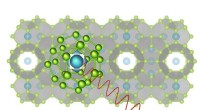
* Crystals are made up of atoms arranged in a highly ordered, repeating pattern.
* Electrostatic attraction is the force of attraction between oppositely charged particles. In the context of crystals, this means the attraction between positively charged atomic nuclei and negatively charged electrons.
There are two main ways this electrostatic attraction manifests in crystals:
1. Ionic Bonding: This occurs when atoms gain or lose electrons, forming ions with opposite charges. These ions then attract each other strongly, forming a stable crystal lattice. Examples include sodium chloride (NaCl) and calcium fluoride (CaF2).
2. Metallic Bonding: In metals, electrons are delocalized, meaning they are not bound to specific atoms but rather move freely throughout the entire crystal structure. This creates a strong, positive charge on the metal ions and a negative charge on the electron "sea", leading to strong attractive forces that hold the lattice together.
While electrostatic attraction is the primary force responsible for holding crystals together, other forces can contribute, such as:
* Covalent Bonding: This type of bonding involves sharing electrons between atoms. While less common in bulk crystals, it can play a role in certain crystal structures.
* Van der Waals Forces: These are weak, temporary attractions between molecules, and they can contribute to the overall stability of some crystal structures.
It's important to remember that the strength of the forces holding the lattice together varies depending on the specific type of crystal and its bonding.