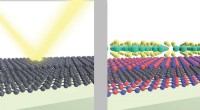
Diffraction is the bending of waves as they pass around an obstacle or through an opening. It's not about increasing speed, but rather about the change in direction of the wave's path.
Here's why this happens:
* Huygens' Principle: Every point on a wavefront can be considered a source of new wavelets that spread out in all directions. These wavelets interfere with each other, and the overall pattern of the wave is determined by the constructive and destructive interference of these wavelets.
* Obstacles and Openings: When a wave encounters an obstacle or passes through an opening, the wavelets originating from points near the edge of the obstacle or opening can spread out into regions where the wave wouldn't normally travel. This bending is what we call diffraction.
Important Notes:
* Wavelength and Diffraction: The amount of diffraction depends on the wavelength of the wave and the size of the obstacle or opening. Shorter wavelengths diffract less, while longer wavelengths diffract more. This is why you see diffraction more prominently with sound waves (long wavelength) than with light waves (short wavelength).
* Speed of the Wave: The speed of a wave can change when it enters a new medium (like light slowing down in water), but this is a separate phenomenon from diffraction. Diffraction is about the bending of waves, not their speed.
Let me know if you'd like to learn more about specific examples of diffraction or the mathematics behind it!