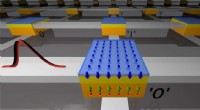
* Molecular Density: Molecules in solids are tightly packed together, with very little space between them. This means they are constantly interacting with each other.
* Vibrational Energy Transfer: When sound travels through a solid, it causes the molecules to vibrate. These vibrations are quickly passed on to neighboring molecules due to the close proximity, creating a chain reaction.
* Rigidity and Elasticity: Solids are rigid and elastic, meaning they resist changes in shape. This resistance allows for the efficient transfer of vibrational energy, leading to faster sound propagation.
In contrast:
* Liquids and Gases: Molecules in liquids and gases are more spread out, allowing for greater freedom of movement. This leads to less frequent collisions and a slower transfer of vibrational energy, resulting in slower sound speeds.
Here's an analogy:
Imagine a line of people holding hands. If you give a quick push to the first person, the impulse will quickly travel down the line because the hands are connected. This is similar to how sound travels in a solid.
In contrast, if the people are farther apart, the impulse takes longer to travel down the line. This is similar to how sound travels in liquids and gases.
In summary: The tight packing and strong interactions between molecules in solids allow for efficient transfer of vibrational energy, leading to faster sound propagation.