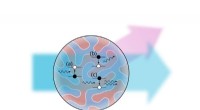
Think of it like a chain reaction:
1. Electric Field: When a voltage is applied across a conductor, an electric field is created. This field exerts a force on the free electrons within the conductor.
2. Electron Movement: This force causes the electrons to move, but not in a straight line like a ball rolling down a hill. Instead, they drift in a random, jerky motion, constantly bumping into atoms and other electrons.
3. Chain Reaction: As one electron moves, it creates a "space" for another electron to move into. This domino effect creates a flow of electrons throughout the conductor, even though they don't directly touch each other.
The key concept is the electric field:
* The electric field acts on all electrons in the conductor, not just those directly next to each other.
* This field exerts a force that causes the electrons to move, even though they are constantly colliding with atoms and other electrons.
Analogy:
Imagine a crowded room. If someone at the back of the room pushes forward, it doesn't mean that they need to physically touch everyone in front of them to make the people at the front move. The push creates a ripple effect that travels through the crowd.
In summary:
Electrons in a conductor are pushed by an electric field, not by direct contact. This field creates a chain reaction that results in the flow of electrons, even though they are constantly colliding with atoms and each other.