1. Moving Charges Create Magnetic Fields:
* Fundamental Principle: A moving electric charge generates a magnetic field around it. The stronger the charge and the faster it moves, the stronger the magnetic field.
* Example: Electrons orbiting the nucleus of an atom create a tiny magnetic field due to their motion. This is why some materials become magnets.
2. Magnetic Fields Affect Moving Charges:
* Force on a Charge: A magnetic field exerts a force on a moving electric charge. The force is perpendicular to both the direction of the magnetic field and the direction of the charge's motion.
* Example: This is the principle behind electric motors. A magnetic field causes a current-carrying wire (moving charges) to rotate.
3. Changing Magnetic Fields Create Electric Fields:
* Faraday's Law: A changing magnetic field induces an electric field. This means that if you move a magnet near a wire or coil, an electric current will flow in the wire.
* Example: This is how generators work. A rotating magnet induces an electric current in a coil of wire.
4. The Intertwined Nature:
* Maxwell's Equations: James Clerk Maxwell, in his famous equations, unified electricity and magnetism. He showed that electric and magnetic fields are intimately related and can be transformed into one another.
* Light as an Electromagnetic Wave: Maxwell's equations led to the prediction that light is an electromagnetic wave, meaning it consists of oscillating electric and magnetic fields traveling together.
Key Concepts to Remember:
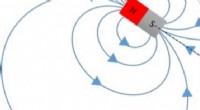
* Magnetic Fields: Regions of space where magnetic forces can be detected.
* Electric Fields: Regions of space where electric forces can be detected.
* Electromagnetic Induction: The process of generating an electric field by a changing magnetic field.
* Lorentz Force: The force exerted on a charged particle by electric and magnetic fields.
Examples of Interactions:
* Compass: A compass needle aligns itself with Earth's magnetic field due to the interaction between the magnetic field and the magnetic dipoles in the needle.
* Electric Motors: Motors use the force exerted by magnetic fields on moving charges to create rotational motion.
* Generators: Generators convert mechanical energy into electrical energy by using a changing magnetic field to induce an electric current.
* Electromagnetic Waves: Radio waves, microwaves, visible light, and X-rays are all forms of electromagnetic waves that result from the interaction of electric and magnetic fields.
In summary, electric charges and magnets have a deep and intertwined relationship. Moving charges create magnetic fields, and magnetic fields exert forces on moving charges. This interaction is fundamental to the workings of many technologies and underlies the very nature of light.