1. Orbital Motion:
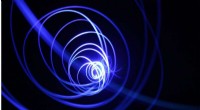
* The spacecraft enters orbit. Freefall means the spacecraft is constantly falling towards the Earth due to gravity, but its forward motion keeps it from actually hitting the surface. Instead, it continuously misses the Earth, following a curved path around it. This is the principle behind orbital mechanics.
* The shape of the orbit depends on the initial speed and direction of the spacecraft. A higher speed results in a more elliptical or even circular orbit.
2. Weightlessness:
* The spacecraft and its occupants experience weightlessness. This isn't because there's no gravity in space, but because both the spacecraft and its contents are falling at the same rate. There's no force pushing them against the floor of the spacecraft, creating the sensation of weightlessness.
3. Energy Conservation:
* The spacecraft's total energy remains constant. The spacecraft's potential energy (due to its position in the Earth's gravitational field) is continuously converted into kinetic energy (due to its motion) and vice versa. This is why spacecraft need to use fuel to adjust their orbit – to change the balance of potential and kinetic energy.
4. Atmospheric Drag:
* In low Earth orbit, the spacecraft experiences some atmospheric drag. This slows the spacecraft down, causing it to lose altitude and eventually re-enter the atmosphere. For this reason, spacecraft in low Earth orbit need to use fuel to maintain their orbit.
5. Other Considerations:
* The effects of other celestial bodies, like the moon and sun, can also influence the spacecraft's trajectory. These gravitational pulls can cause slight changes in the orbit over time.
* The spacecraft's own propulsion system can be used to adjust its orbit or perform maneuvers. This allows for controlled movement within the orbital path.
In summary: The combination of forward motion and freefall results in orbital motion, weightlessness, and a dynamic interplay of energy conservation. The spacecraft's journey then depends on factors like initial speed, atmospheric drag, and its propulsion system, allowing it to perform various maneuvers in space.