* The angle of incidence: This is the angle at which the light ray hits the surface.
* The refractive indices of the two mediums: The refractive index is a measure of how fast light travels through a medium. The greater the difference in refractive indices between the two mediums, the more the light will bend.
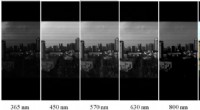
* The wavelength of light: Different colors of light (different wavelengths) bend at slightly different angles. This is why a prism separates white light into its constituent colors.
Here's how to visualize it:
Imagine a light ray traveling from air (low refractive index) to water (higher refractive index). The light ray will bend towards the normal (an imaginary line perpendicular to the surface) as it enters the water.
Snell's Law describes the relationship between the angles of incidence and refraction and the refractive indices of the two mediums:
n1 * sin(θ1) = n2 * sin(θ2)
Where:
* n1 = refractive index of the first medium
* θ1 = angle of incidence
* n2 = refractive index of the second medium
* θ2 = angle of refraction
In summary, light doesn't bend at a fixed angle. The bending depends on the angle of incidence, the refractive indices of the mediums, and the wavelength of light.