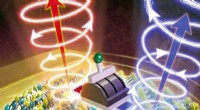
The air will flow from the area of higher pressure to the area of lower pressure.
Explanation:
* Pressure Differences: Pressure is a force exerted per unit area. When there's a pressure difference between two points, it means there's an imbalance in the forces pushing on the air molecules.
* Air Movement: Air naturally wants to move from areas of high pressure to areas of low pressure to equalize the forces. This is how wind is created on a larger scale.
* Air Flow: In this scenario, the air molecules near the barometer with higher pressure will be more compressed and have higher kinetic energy (moving faster). They will collide with air molecules near the lower pressure barometer, transferring some of their energy and causing the air to flow towards the lower pressure area.
Factors Affecting Air Flow:
* Magnitude of Pressure Difference: The greater the pressure difference, the faster the air will flow.
* Distance Between Barometers: The closer the barometers are, the stronger the flow will be.
* Other Atmospheric Conditions: Wind, temperature gradients, and other factors can influence the overall airflow.
Important Note: A 1-kilometer distance is relatively small in terms of typical atmospheric pressure gradients. The pressure difference would likely be very small, resulting in only a very slight flow of air between the barometers.