Key Concepts
* Refraction: The bending of a wave as it passes from one medium to another.
* Speed of Light: The speed of light is constant in a vacuum but changes when it travels through different mediums.
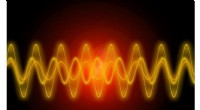
* Wavelength: The distance between two successive crests or troughs of a wave.
* Frequency: The number of wave cycles passing a point in one second.
What Happens at the Boundary
1. Speed Changes: The speed of the wave usually changes when it enters a new medium. The speed of light in a medium is determined by the medium's refractive index. A higher refractive index means a slower speed.
2. Wavelength Changes: The wavelength of the wave changes proportionally to the speed change. If the speed decreases, the wavelength also decreases. This relationship can be summarized as:
* Speed / Wavelength = Frequency
Since the frequency remains constant (see below), a change in speed necessitates a change in wavelength.
3. Frequency Remains Constant: The frequency of a wave (the number of cycles per second) generally stays the same when it crosses a boundary. This is because frequency is a property of the source of the wave, not the medium it's traveling through.
Example
Imagine a light wave traveling from air into water.
* Speed: Light travels slower in water than in air, so its speed decreases.
* Wavelength: Because the speed decreases, the wavelength of the light wave also becomes shorter.
* Frequency: The frequency of the light wave remains the same.
Important Notes
* Angle of Incidence: The angle at which the wave hits the boundary also influences how it is refracted.
* Reflection: Some of the wave energy may be reflected back into the original medium instead of being transmitted.
* Total Internal Reflection: If the angle of incidence is large enough and the speed of light is slower in the second medium, all of the light may be reflected back into the first medium. This phenomenon is called total internal reflection.
Let me know if you'd like a more detailed explanation of any of these concepts!