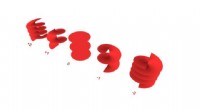
Here's how it works:
* Vibrations: When a string is plucked or struck, it vibrates at a specific frequency (how many times it moves back and forth per second).
* Transfer of Energy: When a vibrating string is close enough to another string, the vibrations can transfer energy to the second string.
* Matching Frequencies: If the frequency of the vibrations from the first string matches a natural frequency of the second string, the second string will start to vibrate strongly, even if it wasn't initially vibrating. This is resonance.
Here are some key points about resonance:
* Amplitude: The second string will vibrate with a larger amplitude (the extent of its movement) than it would if the first string wasn't vibrating.
* Sympathetic Vibrations: This is sometimes referred to as "sympathetic vibrations" because the second string seems to "sympathize" with the vibrations of the first string.
* Examples: Resonance is a common phenomenon in music. For example, when a string is plucked on a guitar, the other strings can resonate, creating a richer sound. It also plays a role in the design of musical instruments.
Let me know if you'd like more details on resonance or specific examples!