Here's a breakdown:
* Wave Vibration: A wave is a disturbance that travels through a medium or space, transferring energy without transferring matter. This disturbance causes particles within the medium to vibrate.
* Equilibrium Position: This is the resting position of a particle in the medium when there's no wave present.
* Maximum Displacement: As the wave passes, the particle oscillates back and forth. The amplitude represents the furthest distance the particle moves from its equilibrium position.
Visualizing Amplitude:
Imagine a rope tied to a post. If you give the rope a quick up-and-down motion, you'll create a wave that travels along the rope. The amplitude of this wave is the maximum height the rope reaches above its resting position.
Importance of Amplitude:
* Energy: The amplitude of a wave is directly related to its energy. A wave with a larger amplitude carries more energy.
* Loudness (Sound): In sound waves, amplitude corresponds to loudness. Higher amplitude sound waves are perceived as louder.
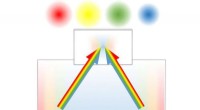
* Intensity (Light): In light waves, amplitude corresponds to brightness. Higher amplitude light waves are perceived as brighter.
Let me know if you'd like more details about wave properties or examples of amplitude in different types of waves!