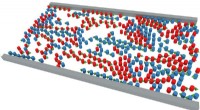
* Bernoulli's Principle: This principle states that as the speed of a fluid (like air) increases, the pressure it exerts decreases. This is the core concept behind lift generation. An airplane's wing is designed to create a faster flow of air over the top surface than the bottom. This creates a lower pressure above the wing and higher pressure below, resulting in an upward force (lift).
* Newton's Third Law of Motion: This law states that for every action, there is an equal and opposite reaction. The airplane's engines propel air backwards, and in reaction, the airplane is pushed forward. This is the principle behind thrust.
* Newton's Law of Gravity: This law describes the force of attraction between objects with mass. Gravity pulls the airplane down, which must be countered by the lift generated by the wings.
* Aerodynamics: This field studies the interaction of air with moving objects, like airplanes. It encompasses many principles related to wing design, airflow, and the forces acting on an airplane in flight.
In summary:
* Lift: Generated by Bernoulli's Principle, acting on the wings.
* Thrust: Generated by the engines, based on Newton's Third Law of Motion.
* Drag: The force opposing an airplane's motion through the air.
* Gravity: The force pulling the airplane down.
The airplane is able to fly by achieving a balance of these forces:
* Lift must be greater than gravity for the airplane to ascend.
* Thrust must be greater than drag for the airplane to move forward.
Understanding these principles allows engineers to design airplanes that can efficiently and safely fly.