1. The "Electron Sea" Model:
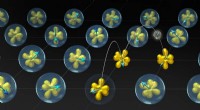
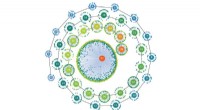
* Free Electrons: In metals, the outermost electrons of each atom are very loosely bound. They're not attached to a specific atom and can easily move throughout the metal's structure. These are called "free electrons."
* Metal Lattice: The metal atoms themselves form a rigid lattice, like a crystal structure. This lattice is composed of positively charged ions (the atoms that lost their outermost electrons).
* The "Sea": The free electrons act like a "sea" that surrounds the positively charged ions. They're constantly moving in random directions, colliding with each other and the ions.
2. Drift Velocity:
* Electric Field: When an electric field is applied across the metal, it creates a force on the free electrons, causing them to move in a specific direction.
* Drift Velocity: This directed motion is called "drift velocity." It's much slower than the random thermal motion of the electrons, but it's what allows current to flow through the metal.
3. Conductivity:
* Good Conductors: Metals are good conductors because they have a large number of free electrons. This means that the drift velocity can be significant even for relatively small electric fields.
* Resistivity: The resistance to the flow of electrons is called "resistivity." Metals have low resistivity, allowing for the easy flow of current.
4. Factors Affecting Electron Movement:
* Temperature: Higher temperatures increase the random motion of the electrons, making it harder for them to move in a specific direction (drift velocity). This increases resistivity.
* Impurities: Impurities in the metal can disrupt the regular lattice structure, making it harder for electrons to move freely. This also increases resistivity.
In summary:
* Electrons in metals are like a "sea" of free electrons moving randomly.
* An electric field creates a drift velocity, causing them to move in a specific direction.
* Metals are good conductors due to their large number of free electrons.
* Temperature and impurities affect electron movement and conductivity.