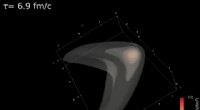
* Quantum particles don't have definite locations: In the realm of quantum mechanics, particles don't behave like the everyday objects we're familiar with. They don't have a fixed position until we try to measure them. Instead, they exist as a "wave function" – a probability distribution describing the likelihood of finding them in different locations.
* Superposition: This means a particle can exist in a "superposition" of states, meaning it's simultaneously in multiple possible locations. However, this is not the same as being "physically" in two places at once.
* Measurement and collapse: The act of measuring the particle's location "collapses" the wave function, forcing it to choose one of its possible positions.
So, can quantum physics be in two places at the same time?
It's not quite accurate to say that "quantum physics" itself is in two places at once. Instead, individual quantum particles can exist in a superposition of states, effectively being in multiple locations simultaneously *until* we measure them.
A helpful analogy: Imagine a spinning coin. Before you look, it's both heads and tails at the same time. Once you look, it collapses to one state or the other. Quantum particles are similar in that they exist in multiple states until we observe them.
It's important to remember that quantum physics is strange and counterintuitive. Our everyday experience doesn't prepare us for the weird world of the very small!