Physics as a Foundation for Information Technology:
* Fundamental principles: Physics provides the bedrock for many IT technologies.
* Semiconductors: The fundamental building blocks of modern computers rely on principles of quantum mechanics to control the flow of electrons in transistors.
* Electromagnetism: This fundamental force governs the transmission of data via signals in cables, Wi-Fi, and optical fibers.
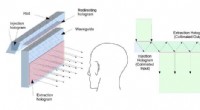
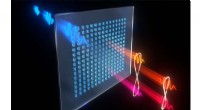
* Optics: Optical fibers, laser technology, and even the storage mechanisms in optical drives rely on principles of optics.
* Limits of computation: Physics sets limits on how much information can be stored and processed. For example, the Heisenberg uncertainty principle dictates the limits of data storage density.
Information Technology Driving Advancements in Physics:
* Data analysis and modeling: Advanced computing power allows physicists to analyze massive datasets from experiments and simulations, leading to new discoveries and theoretical breakthroughs.
* Scientific instruments: IT plays a crucial role in the design and control of complex scientific instruments, such as particle accelerators and telescopes.
* Simulations and modeling: Complex physical phenomena are modeled and simulated using computational methods, providing insights that would be impossible to obtain through experiments alone.
Examples of Specific Areas of Intersection:
* Quantum Computing: This emerging field aims to leverage quantum mechanics to develop computers with significantly faster processing capabilities.
* Nanoelectronics: The miniaturization of electronic components is pushing the boundaries of traditional silicon-based technology and requiring new insights from physics.
* Artificial Intelligence (AI): AI algorithms are heavily inspired by the structure and function of the brain, which is ultimately governed by physical laws.
The Future:
As technology continues to advance, the intersection of physics and IT will only grow stronger. Here are some future areas of potential convergence:
* Neuromorphic computing: Building computers inspired by the structure and function of the brain.
* Advanced materials and devices: Using physics to create new materials and devices for more efficient and powerful computing.
* Cosmology and data analysis: Combining physics research with big data techniques to understand the universe better.
In essence, physics provides the fundamental principles underlying IT, while IT empowers physicists to explore and understand the universe in new and profound ways. They are deeply intertwined, and their relationship is crucial for future technological advancements.