Diffraction is the phenomenon where waves spread out as they pass through an opening or around an obstacle. This happens to all types of waves, including light, sound, and water waves.
Think of it like this:
Imagine throwing a pebble into a still pond. The ripples spread outwards in a circular pattern. Now, imagine placing a barrier with a small gap in the pond. The ripples will still spread out, but they will also bend around the edges of the gap, creating a new wave pattern on the other side. This bending of the waves around the obstacle is diffraction.
Key Points about Diffraction:
* Wavelength: The amount of diffraction depends on the wavelength of the wave. Shorter wavelengths (like blue light) diffract less than longer wavelengths (like red light).
* Size of the opening/obstacle: Diffraction is more noticeable when the size of the opening or obstacle is comparable to the wavelength of the wave. For example, light waves diffract more through a narrow slit than a wide one.
* Interference: Diffracted waves can interfere with each other, creating patterns of light and dark regions. This is called interference and is used in technologies like holograms and X-ray diffraction.
Examples of Diffraction in Everyday Life:
* Light spreading through a window: You can see light "bend" around the edges of a window, casting faint light patterns on the wall behind it.
* Sound waves bending around corners: You can still hear someone talking even if they are hidden behind a wall, because sound waves diffract around the edges of the wall.
* Radio waves reaching behind buildings: Radio waves used for communication can diffract around buildings and obstacles, allowing you to receive signals even if you are not in a direct line of sight with the transmitter.
Diffraction plays a crucial role in many scientific fields and technologies:
* Astronomy: Diffraction limits the resolution of telescopes, but it also helps us understand the structure of stars and galaxies.
* Microscopy: Diffraction is used in electron microscopes to create images of very small objects.
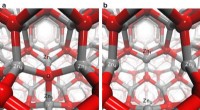
* X-ray diffraction: Used to study the structure of crystals and molecules.
Overall, diffraction is a fundamental wave property that affects how waves interact with their surroundings. It's responsible for a wide variety of phenomena, from the colorful patterns seen in soap bubbles to the technology that allows us to see the world around us.