Understanding Wave Properties
* Wavelength (λ): The distance between two consecutive crests (or troughs) of a wave.
* Frequency (f): The number of wave cycles passing a fixed point per second.
* Speed (v): The distance the wave travels per unit of time.
The Fundamental Relationship
The speed of a wave is directly related to its wavelength and frequency:
v = fλ
Experimental Methods
1. Using a Ruler and Stopwatch (for waves on a string or water):
* Setup:
* Create a wave on a string or in a ripple tank.
* Mark a starting point for the wave.
* Use a ruler to measure the distance between two consecutive crests (wavelength, λ).
* Use a stopwatch to time how long it takes for a certain number of waves to pass a fixed point.
* Calculation:
* Frequency (f): Divide the number of waves counted by the time it took for them to pass.
* Speed (v): Multiply the frequency (f) by the wavelength (λ).
2. Using a Sound Speed Meter (for sound waves):
* Setup:
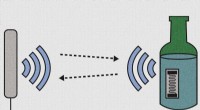
* Use a sound speed meter, which typically emits a sound pulse and measures the time it takes for the pulse to return after reflecting off a target.
* Calculation:
* The sound speed meter directly calculates the speed of sound using the distance to the target and the time it takes for the pulse to return.
3. Using a Stroboscope (for waves in a ripple tank):
* Setup:
* Create waves in a ripple tank.
* Adjust the stroboscope's frequency until the waves appear to be frozen in time.
* Calculation:
* The stroboscope's frequency will be equal to the frequency of the waves (f).
* Measure the distance between two consecutive crests (λ).
* Calculate the speed (v) using v = fλ.
Important Considerations
* Accuracy: Ensure accurate measurements of wavelength and time. Use a ruler with appropriate precision and a stopwatch with a good resolution.
* Wave Type: The method you use will depend on the type of wave you are investigating.
* Environment: The speed of sound and other waves can be influenced by factors such as temperature and medium.
Example: Measuring the Speed of Waves on a String
1. Measure the wavelength: Let's say you measure the distance between two crests to be 0.2 meters (λ = 0.2 m).
2. Measure the frequency: You count 10 waves passing a point in 5 seconds. The frequency is 10 waves / 5 seconds = 2 Hz (f = 2 Hz).
3. Calculate the speed: The speed of the wave is v = fλ = 2 Hz * 0.2 m = 0.4 m/s.
Let me know if you'd like more detail on any of these methods!