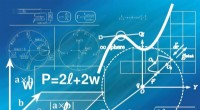
F = G * (m1 * m2) / r²
Where:
* F is the force of gravity
* G is the gravitational constant (approximately 6.674 × 10⁻¹¹ N⋅m²/kg²)
* m1 and m2 are the masses of the two objects
* r is the distance between the centers of the two objects
This law tells us that:
* Gravity is directly proportional to the product of the masses of the two objects: The larger the masses, the stronger the gravitational attraction.
* Gravity is inversely proportional to the square of the distance between the objects: The farther apart the objects are, the weaker the gravitational attraction.
This means that the force of gravity:
* Increases as the mass of either object increases.
* Decreases as the distance between the objects increases.
For example:
* The Earth has a stronger gravitational pull on you than the moon because the Earth has a much larger mass.
* The gravitational attraction between you and the Earth is weaker when you are standing on a mountain than when you are at sea level because you are farther from the Earth's center.
It is important to note that gravity is a fundamental force of nature and is responsible for many phenomena in the universe, including:
* The orbits of planets around stars.
* The formation of stars and galaxies.
* The tides on Earth.
* The weight of objects.